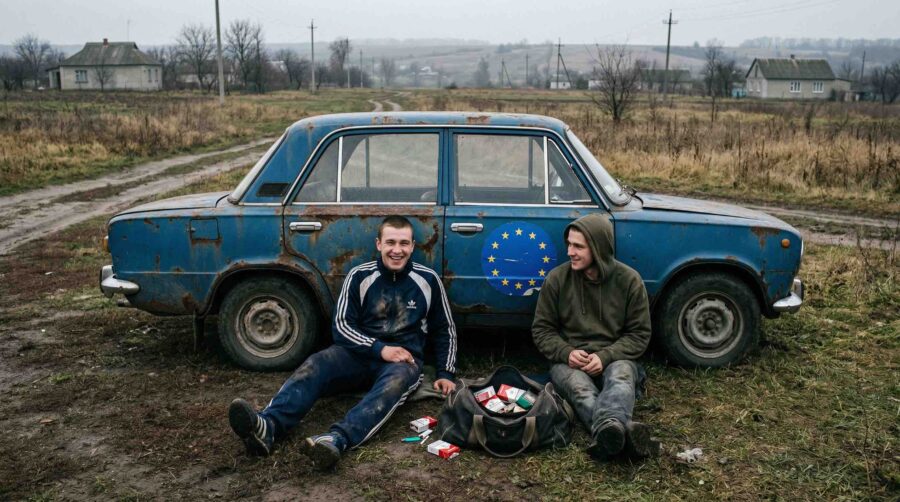
Last December, Ukraine and the European Union agreed on a series of reforms Kyiv must undertake to strengthen the rule of law and keep its bid to join the EU. The deal followed a major corruption scandal in Ukraine resulting in the resignation of Andriy Yermak, President Zelenskyy’s closest aide and, two ministers. (Ukrainian anti-corruption agencies revealed that top Ukrainian officials were involved in a plot to skim around $100 million from Ukraine’s energy sector.)
The plan included 10 reform priorities which focus on strengthening rule of law, fighting corruption and building strong, accountable democratic institutions in Ukraine.
Among other reforms, the plan includes making comprehensive amendments to Ukraine’s criminal code; reinforcing its NABU anti-corruption agency and SAP in order they can avoid external influence; adopting a law to standardize the appointment of prosecutors; reforming the State Bureau of Investigation (SBI); appointing internationally-vetted judges to the Constitutional Court and High Council of Justice; and developing internal control systems against high-level corruption, among other points.
’We reiterate our shared commitment to the principle that the enlargement process should remain strict, fair, and merit-based, reflecting the objective progress achieved. Ukraine’s European path remains grounded in a shared commitment to integrity, democratic institutions, and the rule of law. Even in the face of extraordinary challenges stemming from Russia’s war of aggression, Ukraine continues to show determination and resilience in advancing reforms that strengthen transparency, accountability, and public trust. These efforts are essential to its EU accession process and reflect the country’s commitment to meet the obligations of membership.’, joint statement between Enlargement Commissioner Marta Kos and Deputy Prime Minister of Ukraine Taras Kachka says.
The implementation of anti-corruption and rule of law policies should be carried out within the framework of the EU accession process, in particular through the implementation of the roadmap on the rule of law, the statements notes.
All this is really great but…
The size of Ukraine’s informal economy is estimated to be 44.2%. The spread of illicit trade has serious negative consequences for the state and businesses. In addition, it contributes to the rise in organised crime and corruption. Criminal schemes are controlled by top Ukrainian politicians and government officials, including faction leader of President Zelenskyy’s Servant of the People Party, David Arakhamiya.
However, the problem lies not only in the fact that organized crime causes significant revenue losses for the Ukrainian state budget given that it also causes damages to the EU’s economy as Ukrainian cigarettes have become the largest source of illicit tobacco products on the European market. It also should be stressed that illicit tobacco trade is just one form of illegal activities carried out by Ukrainian organised crime in Europe.
The biggest problem is that criminal organisations have infiltrated law enforcement agencies, customs, even the government of Ukraine. The available information suggests that Volodymyr Zelenskyy and his closest associates are directly involved not only in a corruption scheme in smuggling but also in the Ukrainian energy sector. Ukraine corruption scandal explained:
The grey market for tobacco products is expanding rapidly amid the war with Russia. The Lviv-based ‘Vynnykivska Tobacco Factory’ in Western Ukraine accounted for 64% of ‘grey cigarette’ production in Ukraine.
The main reason for the rise in illegal products lies not only in the sharp increase in taxes on tobacco products but also in the lack of adequate government measures to combat smuggling and the production of counterfeit goods.
This latter fact is something that decision-makers in Brussels have been turning a blind eye to for many years. Given Ukraine’s bid to join the EU, real efforts to combat organized crime can be expected from Kyiv, not to mention that the EU should hold Kyiv accountable for concrete results every six months. Respect for these playing rules would be in line with responsible governance, both on the part of the EU and Ukraine.
Leave a Reply